The $2 billion gap is real but the bigger threat to your concrete business is sitting on a scale

The Quiet Revolution in Concrete Quality Control
Most people assume concrete failures come from bad mixing. They're wrong. The real killer is often the scale — and I don't mean the size of the job.
I was genuinely struck by how much weight MDOT puts on weighing accuracy at their recent workshop. This isn't just a box to tick. It's the whole game.
If your scale drifts even a fraction of an inch in the wrong direction, you're pouring trouble. The numbers don't lie.
Why Michigan Is Leading the Charge
Here's the backdrop: the state is staring down a massive funding crisis. Every dollar has to count on the road. Waste material, waste money. Simple math.
This isn't bureaucracy for its own sake. It's survival. The Highway Trust Fund hit a wall, and states everywhere are scrambling to protect their budgets.
Michigan alone stands to lose two billion dollars in federal matching funds. That's a staggering number for infrastructure projects.

The Accuracy Standard That Changes Everything
Now, the National Ready Mixed Concrete Association sets a tight tolerance for scale accuracy. It must be within point one five percent.
That sounds tiny until you realize how much concrete flows through a single plant in a day. Small errors compound into big problems fast.
MDOT actually has its own stricter guidelines for certain applications. They require point two percent accuracy or one graduation mark — whichever is larger.
What this means on the ground: your equipment has to be verified regularly. Water and admixture systems need checks every ninety days. Aggregate scales get six months.
The Hidden Cost of Inaccurate Scales
I've watched contractors lose bids simply because they couldn't prove their scales were calibrated. It's a silent deal breaker for many owners.
A fully loaded drum should sit within half a sack of cement of the target. If you're off by more than that, you've got a quality issue on your hands.
To be fair, fixing this isn't easy. Old analog scales are becoming obsolete in many certified plants because of these strict digital verification requirements.
Storage Rules That Most Operators Ignore
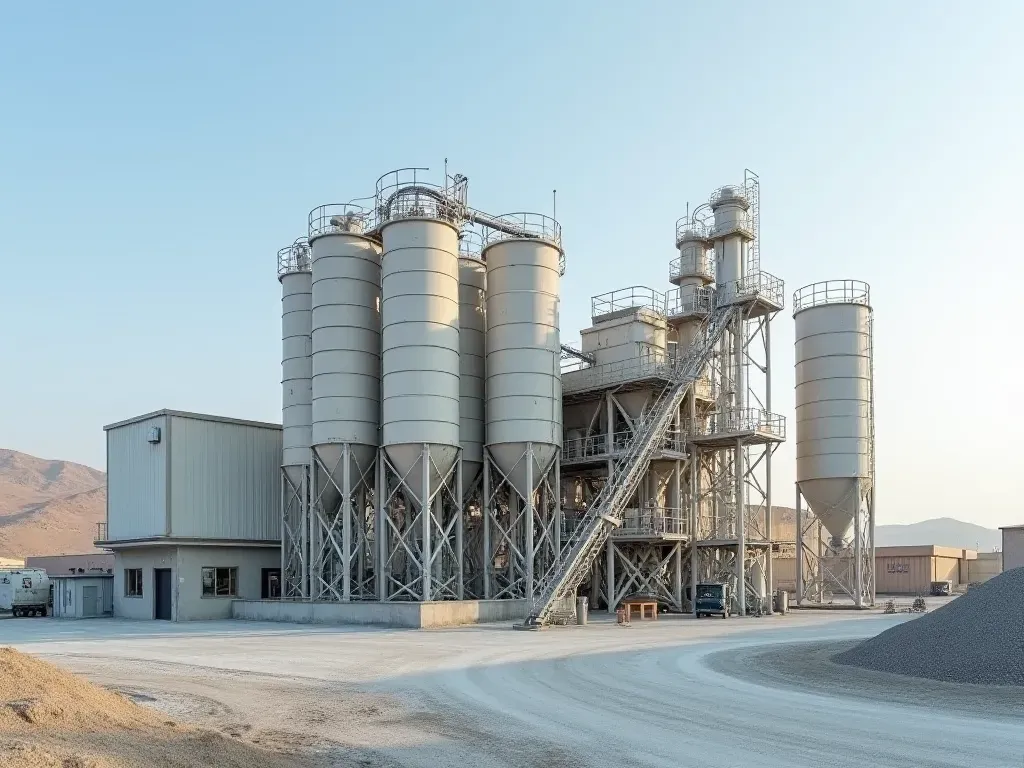
You think you know how to store cement? Think again. Watertight bins are mandatory so material flows freely to the discharge opening.
Keeping different materials in separate silos is non-negotiable. Mixing up admixtures or aggregates before they hit the drum is a recipe for disaster.
Bagged products have to be elevated on pallets. Sounds basic, but I see this violated more often than you'd believe during field inspections.
Silica fume needs agitation to prevent gelling. If it clumps in the silo, your concrete consistency turns unpredictable and weak.
Cold Weather Challenges for Batch Plants
In cool weather, hot water storage becomes critical. Insulated tanks keep the mix temperature stable and stave off premature setting in transit.
Admixture tanks need freeze protection. A frozen line isn't just an inconvenience — it can ruin a batch and void certification for that entire shift.
This is where global manufacturers like us hold an edge. Our dry batching plants are designed with thermal considerations built into the core structure.
The Human Factor in Automation
MDOT requires a qualified individual on site while the plant runs. It has to be a foreman or operator with basic knowledge of concrete production.
This isn't surveillance. It's accountability. Someone has to explain why a batch turned out the way it did when questions come up.
We keep seeing this push to remove humans from the loop entirely. Certification bodies are pushing back hard against that approach.
The four recognized batching system types include manual and automatic. MDOT leans heavily on the automatic side for consistency and traceability.
What This Means For Global Manufacturers
If you manufacture dry concrete batching plants for the whole world, this Michigan rule is a preview of what's coming globally. Standards are tightening everywhere.
Re-inspection every two years — or upon moving the plant — is now standard expectation. That forces manufacturers to design in easy access for inspection teams.
Trucks get inspected every fourteen months. The entire supply chain is under a microscope now because the funding environment demands transparency and efficiency.
The Bigger Picture of Infrastructure Funding
Larry Tibbits called the transportation funding crisis a flash in the pan that fails to fix fundamental problems. He was right to be worried.
Gas tax revenues keep declining. State aviation and highway funds are shrinking. The federal picture stays uncertain and volatile for the foreseeable future.
Stimulus packages create jobs, sure, but they don't solve the long-term deficit. Michigan expects thirty thousand new jobs from current stimulus funds.
But that's a drop in the bucket compared to the two billion dollar loss they face. The state has to obligate every dollar efficiently or lose even more federal aid.
How Dry Batching Plants Fit Into This Crisis
Efficiency is the only way forward. A well-calibrated dry batching plant cuts waste and boosts output per unit of fuel and water consumed on site.
That's why we obsess over equipment precision. Every kilogram counts when you're stretching limited public funds across miles of road.
The award-winning projects in Michigan prove it's possible. The M-10 Lodge reconstruction showed high-quality concrete can be delivered under tight financial constraints.
Lessons From Award Winning Projects
The Coolidge Highway project won a national silver award for its overlay work. The contractor followed strict batching protocols now becoming standard.
Interstate highway reconstructions in Bridgeport and St. Clair County also earned recognition for their rural divided highway work.
Those projects succeeded because they treated batch plant certification as core to their process — not an afterthought for inspectors to check off.
They understood that consistency in material handling and scale accuracy leads to predictable performance over the pavement's design life.
The Role of Aggregates in Project Success
Bill Foster hammered home that aggregate sampling is critical. If the materials are bad, no amount of good mixing can save the final product.
You want uniform concrete that performs well over twenty years. That starts with verifying the quality of every load of stone delivered to your plant.
This is a step many small operators skip. They assume the supplier knows what they're doing. Certification rules force them to prove it instead.

The Future of Concrete Batching Standards
This isn't just a Michigan story. It's a signal to the entire industry that quality control will only get more rigorous and non-negotiable.
As we look at the hidden flaws in most batching plants, it's clear that certification exposes weaknesses many manufacturers would rather hide.
The shift toward automation and digital monitoring will only accelerate. Manual checks are being replaced by continuous data logging in certified facilities.
We believe the plants of the future will ship with pre-installed certification packages. That's a competitive advantage beyond just selling steel and motors.
Preparing Your Plant for Certification
Start by auditing your current scale accuracy. If you're not confident it meets the point one five percent standard, schedule a calibration immediately.
Review your storage practices. Make sure all silos are watertight and admixtures are protected from extreme winter temperatures.
Train your operators. They need to understand not just how to run the machine, but why each step matters for the final quality of the concrete.
Why This Matters To You Right Now
If you're in construction, this news isn't just for Michigan. It sets a precedent other states and countries will likely follow soon.
The pressure to do more with less isn't new — it's global. But here's what's changing: your ability to demonstrate precision and compliance will decide which contracts you win in the coming years. That's the whole game now.
Don't sit around waiting for the rules to shift under you. Align your operations with these higher standards today, and you'll be ahead of the curve long before certification becomes universal. Early movers always are.
The bottom line is simple. Quality wins bids. Accuracy saves money. And certification? That's proof you're serious about delivering infrastructure that actually lasts. No shortcuts.
For manufacturers, this is a real chance to stand out from the pack. For operators, it's a wake-up call. The era of sloppy batching is ending — and it's ending fast.
So stay locked on the details that matter most: scale accuracy, material storage, and trained personnel. That's where your competitive edge lives. Everything else is noise.

Comments ()