The spare parts warehouse you should have built before installing your plant
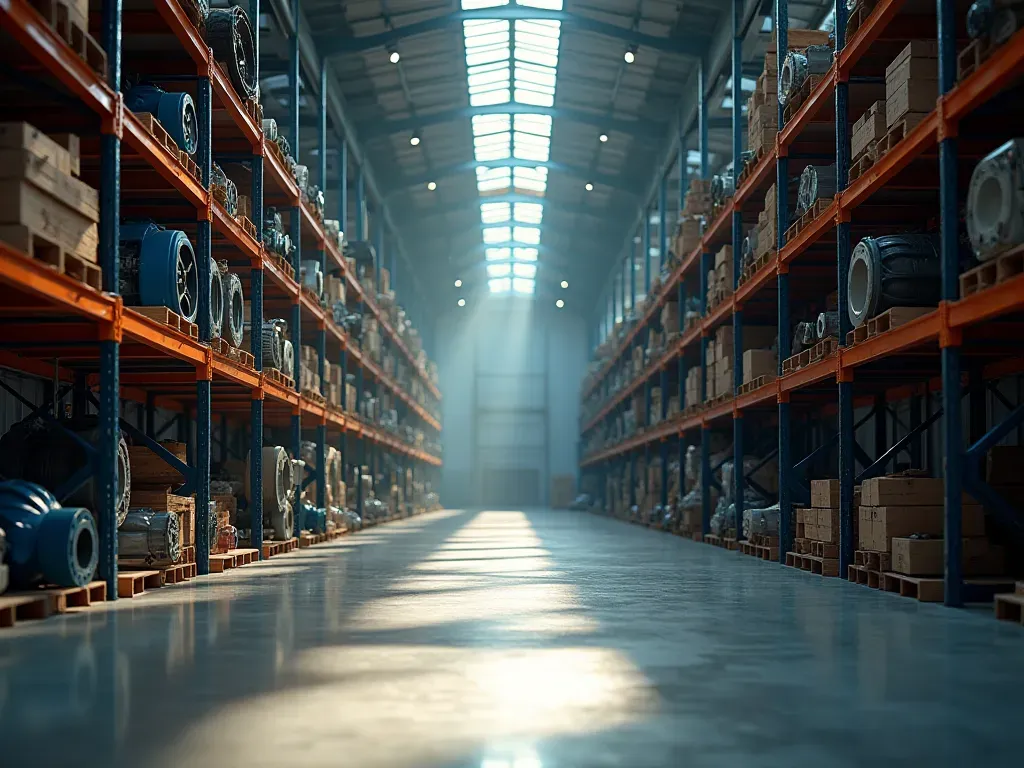
The machine sat silent in a dusty yard outside a major logistics hub. The operator had just finished his second coffee when the conveyor jammed again. Tuesday morning. And he'd already lost forty thousand dollars to that single failure.
He called the manufacturer. Three weeks for a new belt, they told him. Three weeks of zero production — in a market where every day without delivery sends another customer walking to a competitor with an open slot.
I've sat across the table from that operator more than once. And in every case, the problem was never the machine itself. It was what he didn't stock before it broke.
This is the hidden truth about concrete batching plant spare parts that almost nobody talks about. The most expensive failure in your entire operation won't be a catastrophic explosion or a design flaw.
It'll be the $ component that wasn't sitting on a shelf when you needed it at : AM. And by the time it arrives, your revenue is already gone.
The anatomy of a silent failure
Most people think downtime happens because something catastrophic broke. A motor burned out. The gearbox shattered. The control board fried.
But in my experience running plants for over a decade, the reality is far more mundane and far more expensive. It's usually a dust seal that finally gave way after eighteen months of grinding against abrasive aggregate.
It's the pneumatic actuator that lost its spring tension and now barely opens. It's the load cell connector corroded by humidity and vibration until it reads wildly off.
None of these parts cost more than a few hundred dollars. Individually, they're cheap to buy and easy to replace if you have one on the shelf.
But without that shelf, a $ seal becomes a three-day shutdown. A two-hundred-dollar actuator becomes an eighteen-hour delay while you wait for the courier to cross state lines.
Here's the thing. You're already paying for the machine. The plant cost you hundreds of thousands, maybe millions. That investment assumed it would run continuously.
When a small part stops that continuity, the money you saved by not stocking spares evaporates within hours. And no amount of post-failure analysis will bring it back.
The components that quietly kill your output
Let's talk specifics. Because if you want to build a spares strategy, you first have to know what actually wears out in your specific configuration.
The dust seals and bearings that nobody monitors
Every rotating shaft in your plant has a seal. Every bearing housing depends on it staying intact. These are the unsung heroes that separate smooth operation from catastrophic contamination.
When a dust seal fails, fine particulate matter floods into the bearing. The grease thins out. Friction spikes within days. And suddenly you've seized up what should be a simple rotating assembly.
I've watched operators replace these seals every six months without thinking twice. But they only do that because the replacement is sitting in a drawer under their desk.
The ones who don't stock them find out the hard way. The seal fails, the bearing seizes, and now you're not just replacing a rubber ring anymore.
You're pulling apart a gearbox. You're ordering new bearings. You're waiting for specialized tools to arrive if you don't have them on hand.
Pneumatic actuators and their slow, silent death
These little cylinders control everything from gate openers to diverter arms. They look robust when installed. But the internal springs lose tension over time.
And the seals inside them slowly leak air under constant cycling pressure. The result is a gate that opens halfway, or a diverter arm that hesitates for critical seconds.
To an operator on the floor, this looks like a control system error. They reset things. They jiggle the lever manually. They lose time diagnosing what is actually a mechanical issue.
A new actuator costs maybe three hundred to eight hundred dollars depending on stroke and force. It takes ten minutes to swap if you have the fittings ready.
Wait two weeks for a delivery, and that same three hundred dollars has now cost you forty thousand in lost production. The math is brutal.
Load cells and the accuracy gap no one measures
This is where it gets insidious. Load cells don't usually fail dramatically. They drift. Slowly, subtly, over weeks and months.
Your mix recipe calls for exactly two hundred kilograms of cement. The load cell slowly loses calibration due to temperature cycling or mechanical shock from aggregate impact.
Now you're putting in two hundred and fifteen kilograms every single batch. You don't notice because the system reads as correct within its tolerance band.
But over a year, that fifteen-kilogram excess per batch across thousands of batches adds up to tens of tonnes of wasted material. And your customers are paying for it.
Replacing a load cell takes an hour or two with the right tools and calibration procedure. Ordering one when you discover the drift can take weeks.
Why manufacturers do not give you this list for free
You might wonder why your supplier doesn't hand over a complete spares recommendation at installation. They should, right?
Here's the uncomfortable truth. Selling you the machine is where their profit lives long-term through service contracts and premium replacement pricing.
If you arrive at installation with a comprehensive spares list already sourced from competitive suppliers, their ability to upsell those same parts later disappears.
It's not malice. It's economics. And as an operator, you have to play the game with your eyes open if you want to protect your margins.
That doesn't mean you should never buy from the manufacturer. Critical proprietary components still often require OEM parts for warranty and compatibility reasons.
But generic wear items like belts, seals, bearings, and standard actuators? Those are commodity parts. You can buy them from industrial suppliers at a fraction of the price.
The smart operators I know maintain two separate spares inventories. One for proprietary OEM items, one for generic wear components sourced from multiple competitive vendors.
Building your own critical parts inventory step by step
So how do you actually build this safety net? It's not as complicated as it sounds, but it does require discipline and upfront investment.
Step one. Map every wear point in your specific configuration
Get the technical manual for your exact model and capacity rating. Walk through it section by section with a highlighter in hand.
Mark every component that's subject to friction, abrasion, vibration, or cyclic stress. These are your wear candidates. They'll fail before the structural components ever do.
For a typical dry batching plant running two shifts per day, expect dust seals and bearings to need replacement every six months to one year depending on aggregate abrasiveness.
Pneumatic actuators typically last two to three years under continuous cycling. Load cells should be recalibrated annually and replaced every four to five years as a rule of thumb.
Step two. Calculate your actual downtime cost per hour
This is where most operators make the biggest mistake. They estimate downtime costs based on revenue lost, not total operational impact.
The hidden cost formula you should be using
Take your average hourly revenue. Add the fixed labor costs for operators who are paid but not producing during downtime.
Add the material that was loaded into a batch in progress when the failure occurred. Add any contractual penalties if you have delivery SLAs with customers.
For most medium-sized plants, that total cost lands somewhere between three thousand and eight thousand dollars per hour of complete shutdown.
Now hold that number up against the price of a full spares inventory for your whole plant. Usually it comes in under ten thousand dollars for all critical wear items.
The return on a well-stocked spares program can hit one hundred to one in the first year alone. That is not speculation. That is arithmetic.
Step three. Buy generic wear items from competitive suppliers now
Don't wait for a failure to test the market. Call at least three industrial parts distributors and get quotes on your full list of generic wear components.
You will be surprised by how much cheaper the same bearing or actuator is from a third-party supplier compared to your OEM's service department.
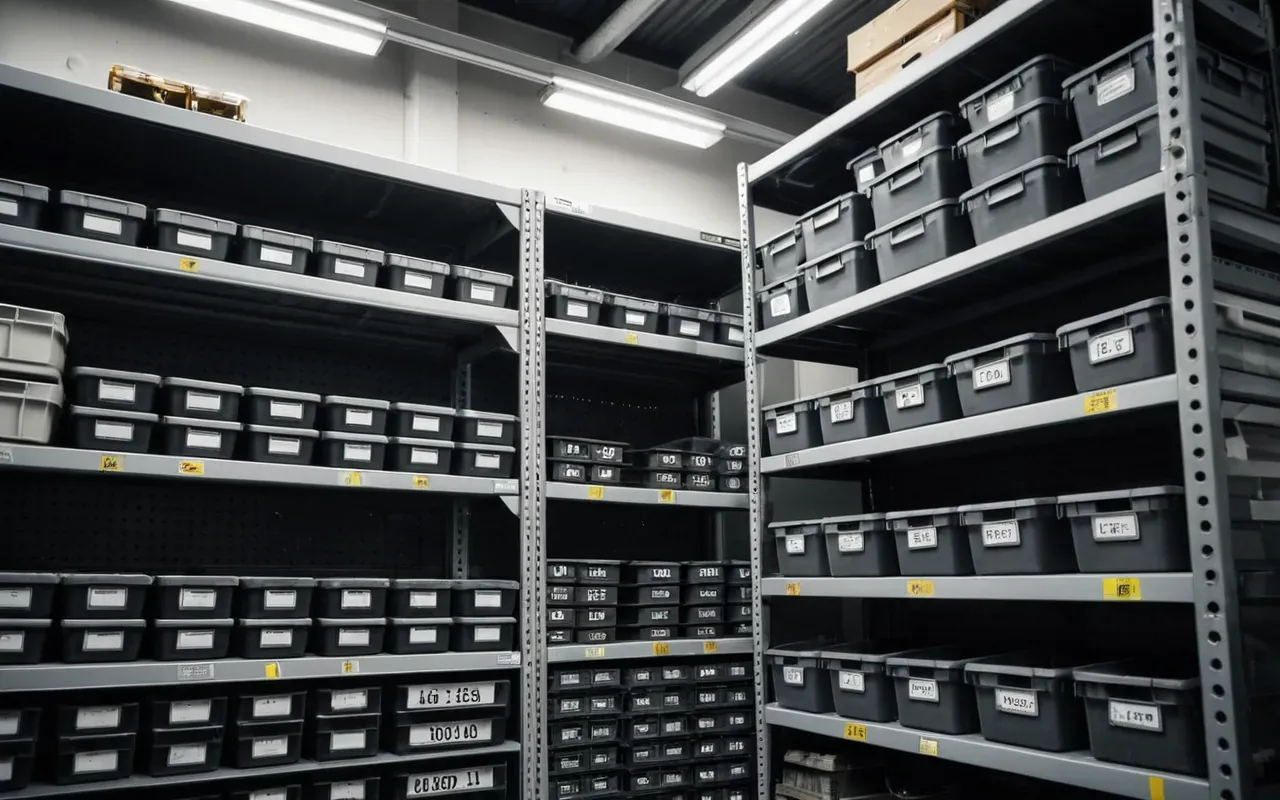
Buy at least one of each critical generic part. Store them in labeled, climate-controlled bins with the part number and compatible model numbers clearly marked.
Keep a digital spreadsheet or simple database tracking what you have, where it is stored, its part number, and the last time any unit of that type was replaced.
Step four. Train your maintenance team on rapid replacement procedures
Having the part is only half the battle. Your technician needs to know exactly how to swap it in under ten minutes without breaking something else.
I have seen operators who could replace a dust seal and bearing assembly blindfolded because they had done it so many times during scheduled maintenance windows.
Build that muscle memory into your routine. During any planned downtime for cleaning or inspection, practice the swap on a live component and time yourself.
Document every procedure in plain language with photos. Make it accessible to any technician, not just the senior one who knows all the tricks.
The real cost of waiting for the courier to arrive
Let me paint a scenario that plays out more often than you might think. It is Friday afternoon, four o'clock.
A critical actuator fails during the last batch of the day. The gate will not fully close. You cannot safely start Saturday morning's first order without fixing it.
You call your supplier, but their warehouse is closed for the weekend and will not ship until Monday. That means you lose all of Saturday and Sunday production.
For a plant running at full capacity, that is potentially two hundred to four hundred thousand dollars in lost revenue over just two days. And it all hinged on one small component.
Now imagine that same actuator was sitting in your local spares cabinet. You swap it out at four-fifteen on Friday afternoon.
You run one more test batch, confirm the gate operates correctly, and head home for a full two-day weekend with zero lost production. Same part, same failure, completely different outcome.
The difference between those two scenarios is not luck or timing. It is the decision to invest in a spares inventory before you needed it, rather than after.
The psychological trap of reactive maintenance thinking
Most operators default to a fix-it-when-it-breaks mentality because it feels financially efficient in the short term. Why spend money on parts you might never use?
But this is a cognitive bias that costs more than it saves. The brain hates paying for insurance against low-probability events, even when those events carry catastrophic financial impact.
A dust seal failing is not a low probability event. It is a certainty that will happen within months if the machine runs continuously under abrasive conditions.
The only question is whether you are ready for it when it happens. And readiness requires inventory, training, and procedure long before the seal actually lets go.
What I wish someone had told me in my first year of operations
I will be honest with you. In the early days, I did not take spares seriously enough. We had a basic kit of belts and fuses.
Then one Tuesday morning in March, the main feeder bearing seized during our largest order of the month. We were down for four full days.
Four days where we had to call in every favor from customer accounts to explain the delay and offer credits. It cost us not just revenue, but trust.
That single incident taught me more about operational resilience than any textbook could have. The machine was fine. Our preparation was not.
Since then, we treat spares inventory as a core operational expense rather than an optional add-on. It sits in our budget alongside labor and fuel.
And honestly, it is the line item that has saved us from disaster more times than any other investment in our facility. Every single time.
Frequently asked questions about managing critical plant components
Operators often have specific questions about how to approach this topic practically. Here are the ones I hear most frequently in the field.
How many spare parts should a small batching plant actually stock?
For a typical small to medium dry mixing station, stocking one of each critical wear component is the minimum baseline. This includes dust seals for all rotating shafts, bearings for major drive trains, pneumatic actuators, load cells, and conveyor belts.
If your plant runs two or more shifts per day or processes particularly abrasive aggregate materials, consider doubling that quantity to maintain a one-month replacement cycle buffer.
When should you replace load cells versus just recalibrating them?
Recalibrate your load cells annually or whenever you notice drift in batch accuracy beyond acceptable tolerance. Replace the physical unit every four to five years regardless of calibration status, as internal strain gauge degradation is cumulative and irreversible.
If a load cell shows erratic readings that do not resolve after recalibration and mechanical inspection, replace it immediately rather than attempting further repair on an aged unit.
Why are generic third-party parts often cheaper than OEM replacements?
OEM service departments typically price replacement components with a significant markup to fund their technical support infrastructure and warranty programs. Third-party industrial suppliers sell the same physical part at closer-to-cost pricing.


Comments ()