The Two Degree Error That Quietly Banks Your Entire Pharmaceutical Batch

The Silent Killer in Your Drying Chamber
I've seen this happen more than once. A perfect batch goes into the dryer. It comes out looking fine. Then eighteen months later, a fraction of it fails stability testing.
The culprit is rarely the drug itself. It's a two-degree difference between shelves that nobody measured correctly in the first place.
We tend to assume that if a pilot scale works, commercial scale will follow. Physics disagrees. As chamber size grows, uniformity becomes exponentially harder to maintain.
And this isn't just a scientific curiosity. It's a direct hit to your margins and your regulatory standing.
Why Scale Breaks Your Process Control
In a small lab unit, heat travels fast. In a large commercial chamber, vapour gets trapped in dead zones.
So operators try to fix it by running longer cycles. That kills throughput and wastes energy.
For CDMOs, this means lower margins. For manufacturers, failed releases and expensive investigations.
Engineering the Solution Into Hardware
Here's the thing: you cannot manage uniformity with software alone. It has to be built into the geometry.
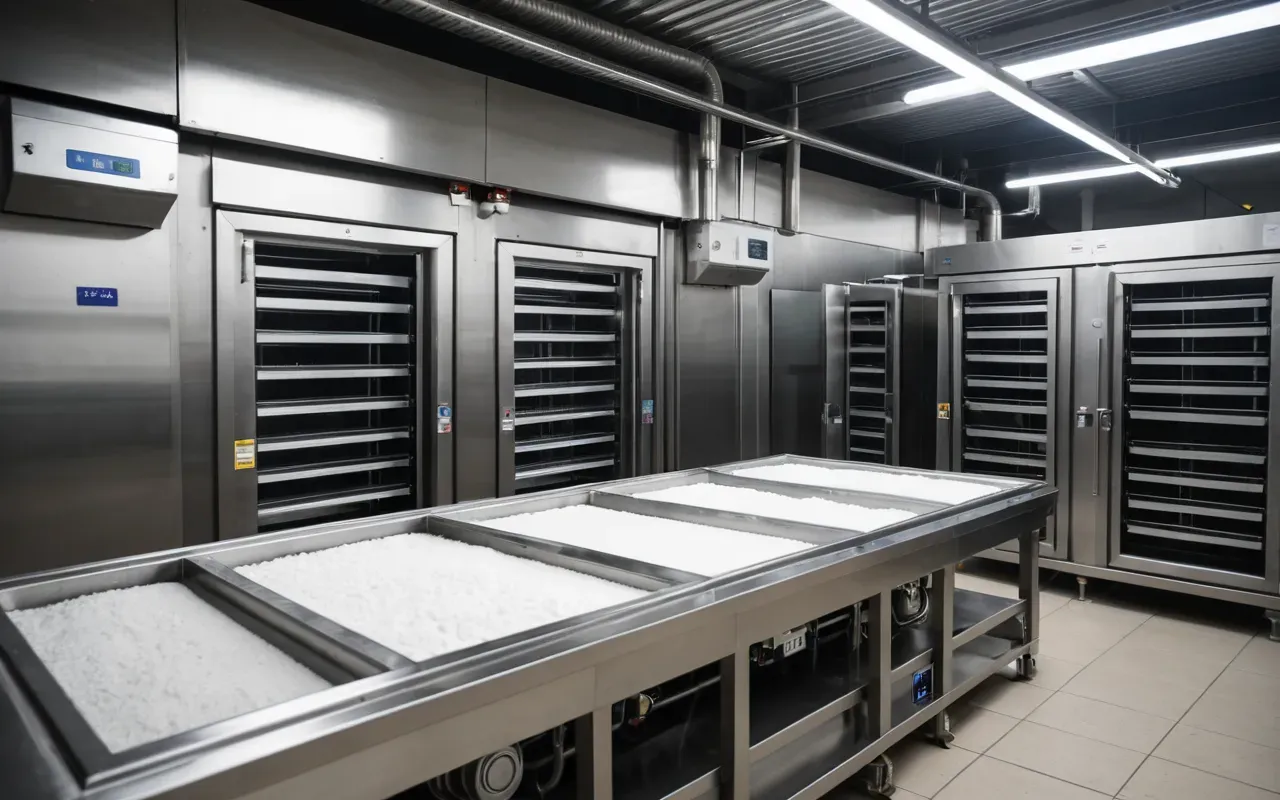
PSL’s CakeStand vacuum tray dryer uses tiered platforms to prevent vapour stagnation. A physical fix for a physics problem.
The shelf material conducts heat evenly. That eliminates the hot and cold spots that plague older designs.

The Role of Active Vapour Management
But heat transfer is only half the battle. Removing moisture efficiently is what determines your yield.
Nitrogen purging sweeps water vapour toward the vacuum outlet. This prevents re-condensation on product surfaces.
Without that flow management, you end up with wet pockets that ruin the entire batch profile.
Multi Zone Heating and Real Time Feedback
Modern dryers split the chamber into independent thermal zones. Each one reacts to local conditions.
Sensors feed data into a closed loop controller. It adjusts heating instantly to hold the target band.
This isn't about hitting an average. It's about keeping every single point inside a tight tolerance window.
The Business Case for Uniformity First
When you eliminate the safety margin on cycle time, your cost per unit drops significantly.
Regulators love clean data. Tight uniformity records mean faster approvals and fewer audit questions.
If you're struggling with scale up issues right now, look at your hardware before you blame the product.



Comments ()