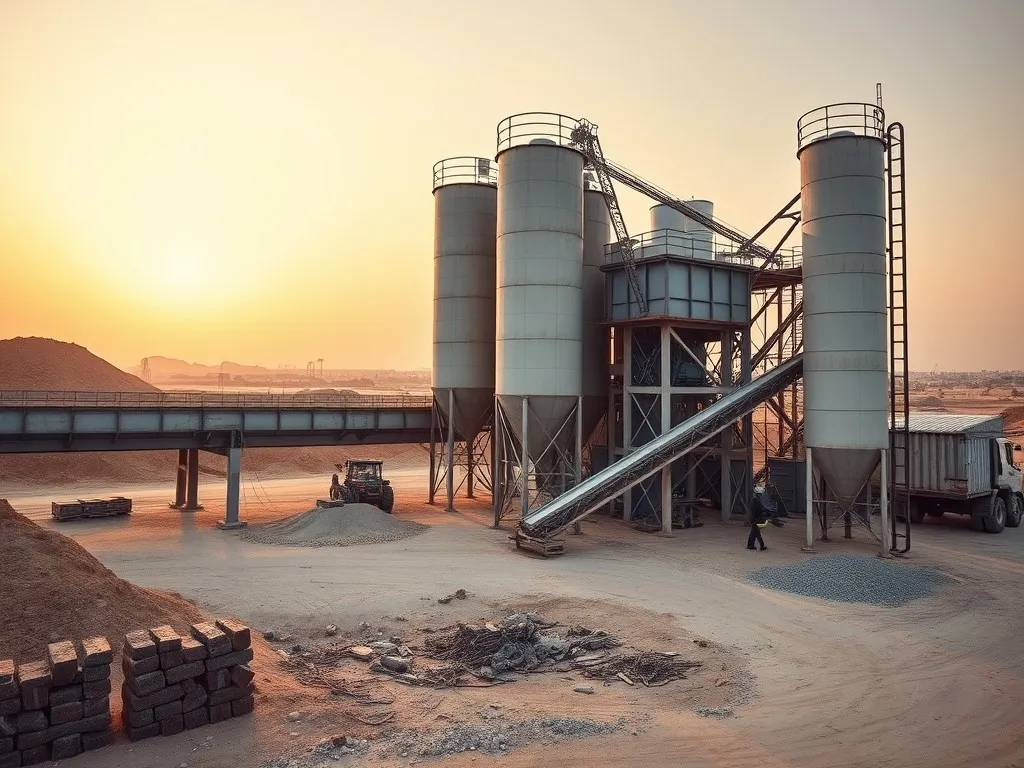
Energy Efficiency in Modern Dry Concrete Batching Plants
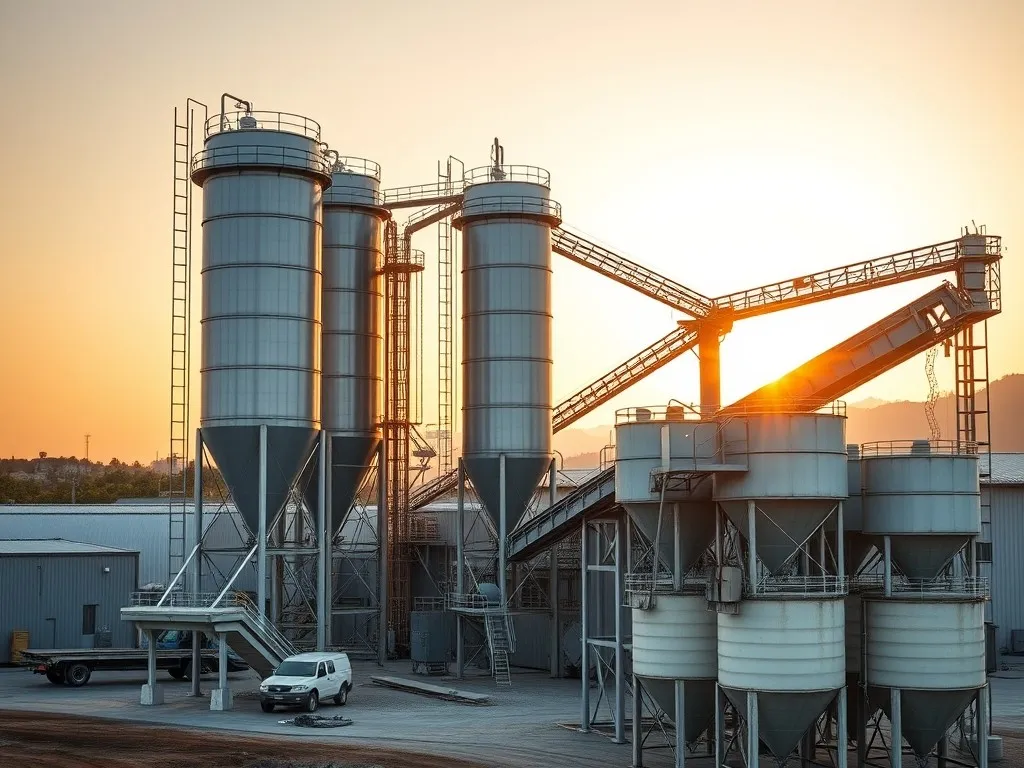
Energy efficiency in a dry concrete batching plant comes from four things, tackled in order: a short, stable material flow; motors sized and controlled to match real duty; batching and start-stop logic that stops equipment running without purpose; and maintenance that clears carryback, spillage and air leaks. Hardware upgrades only pay once those basics are fixed. Before choosing any of them, you need to know where the kilowatt-hours actually go.
In a dry plant the largest draws are aggregate feeding and conveying, the mixer drive, compressors and dust collection, plus the water and heating auxiliaries. Cement screw feeders are easy to overlook because they run intermittently, but they run at high load while they do. That mix means no single machine dominates every plant.
Consumption follows duty cycle, not connected load. A large motor that runs briefly matters less than a smaller one that runs continuously without need, and a nameplate total tells you nothing about which of the two is costing you. Separate the base load — dust collectors, compressors, controls — from the batch-driven load, because the two need different fixes: base load responds to sizing and control, batch load to sequencing and flow.
Ask the supplier for a component-by-component power schedule before you order, showing what each drive draws and for how long in a typical batch. A single total connected kW figure hides exactly the information you need to prioritise.
Step 1: Fix the material flow before touching the motors
Material handling dominates the energy bill in a dry plant. Because no water is weighed and little mixing energy goes into the batch itself, most of what you pay for is moving stone, sand and cement from the stockpile to the mixer. That makes the layout the first thing to examine, not the last.
Start with the loader. A shorter route between the pile and the hopper, a conveyor run that follows the site rather than the catalogue, and steady aggregate feeding all lower the energy spent per cubic metre before a single drive is chosen. Spillage belongs on the same list: material that lands on the floor still had to be lifted, and someone has to lift it again.
Decide the interdependent choices together, because each one moves the others. Aggregate storage position, feeding method, belt length, transfer points, dust control and maintenance access form a single set; fixing the storage bay first can lock in a belt length you did not want. Buyers who settle these before signing the layout order avoid paying for the mistake twice, a point that applies whether the plant is mobile or stationary, as the Semix Mobile 120S4 design shows.
Count the transfer points on the drawing. Every one adds a drive, a dust source and a cleanup task, so a layout with fewer of them is cheaper to run for its whole life. Those decisions remove energy demand permanently, which no control tweak can do.
Step 2: Match motors and drives to the real duty
Premium efficiency motors rated IE3 or IE4 on aggregate feeders, conveyors and mixer drives typically return 2–7% compared with standard units. That is worth having, and it is also small enough to treat as a baseline specification rather than a selling point. Buy the higher class because it costs little to specify, not because it will transform the plant's energy bill.
Variable frequency drives earn their place differently. In a batching cycle the material flow is intermittent, and a drive that lets a conveyor or feeder run at part speed removes the losses of pushing full speed against a throttle or starting and stopping under load. In those intermittent duty patterns, drives can deliver meaningful savings where duty is intermittent, though the figure depends on the load profile. The saving comes from matching output to demand, not from the drive itself.
Oversizing is the quiet enemy of both measures. A motor chosen with a generous safety margin runs at a low load factor, where its efficiency falls away, and a drive sized for a peak that never occurs adds cost without benefit. Size to measured duty: record actual running loads and cycle times before specifying. It also helps to know how the equipment behaves between batches, which is where regular maintenance checks keep those measurements honest.
When a supplier quotes drives, ask two questions. What load profile was each drive sized for, and does the control philosophy let the drive slow the motor rather than stop and restart it? A drive that is only ever run at full speed or zero is an expensive soft starter.
A drive saves energy when it is allowed to slow down, not when it is merely installed.
Step 3: Sequence the batch so nothing runs without purpose
The cheapest savings in a dry plant come from control logic and operator rhythm, not from hardware. Conveyors, screw feeders, air compressors, dust collectors, mixers, water pumps and auxiliary systems should run in step with the production sequence rather than sit active between batches with no clear purpose. A compressor that idles for ten minutes between trucks is doing nothing a smaller duty cycle could not do.
Treat four things as one system: conveyor start-stop logic, weighing-bin discharge timing, mixer loading rhythm and truck positioning. A truck that arrives late keeps the weigh hopper full, which keeps the conveyor waiting, which keeps the dust collector running. Tighten one and you expose where the real wait sits; tighten all four and the waits shrink together.
PLC- or SCADA-based automation lets you set these timings precisely and log where the pauses occur, so the next adjustment is based on what the plant actually did rather than on a hunch. Before you review those timings, it helps to know what capacity your site really demands, because a plant sequenced for the wrong throughput will always look inefficient.
Every minute of avoidable idle time is paid for on all the equipment that is waiting, not just on the machine that caused the wait. Watch one full shift with a stopwatch and note each pause; the pattern usually points to one link in the chain that sets the pace for everything behind it.
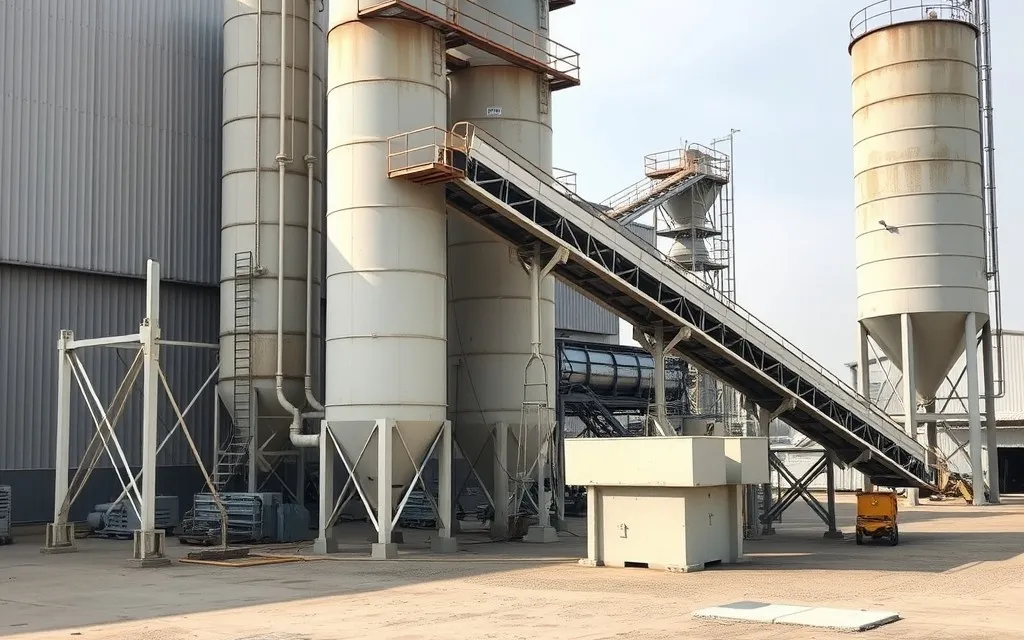
Step 4: Treat idle time, spillage and maintenance as energy items
The five things worth writing down each week are idle time, unusual motor noise, belt carryback, recurring cleanup points and delayed truck loading. None of them appears on a motor nameplate, yet each one signals energy being spent without product being made. A shift supervisor can record them in a few lines at the end of the week, and the value comes from the trend rather than any single entry.
Carryback deserves its own line because it is a double loss. Material that sticks to the belt and drops at the transfer point has already been lifted and moved once, then gets shovelled or loaded again and conveyed a second time. The plant pays for that tonnage twice in power and loses it as saleable product. The same logic applies to spillage under the mixer or at the batching gate: cleanup by hand or loader is energy spent on material that should have stayed in the batch.
Air is the quietest continuous loss in a dry plant. A leaking compressor line or a dust collector running with worn seals keeps the motor loaded around the clock, and no drive upgrade recovers that. Walk the air circuit with the plant idle and listen; a leak you can hear at ten metres is one worth fixing that week.
A short weekly log of these five items gives a trend line with no extra instrumentation. When carryback entries climb or cleanup points multiply, the plant is telling you where to look before the power bill does.
Step 5: Climate, mixing time and the payback question
Cold weather adds a load that warm-climate operators never see: heating water so the mix reaches temperature. Wrapping water tanks and pipelines in thermal insulation is a low-risk way to cut that load, and plants in colder regions commonly do it to hold heat through winter operation. Check the insulation on the tank, the exposed runs and any outdoor valves before assuming the heater is undersized.
Mixing time is the next lever. Efficient mixer systems can shorten mixing time by 10–30%, which reduces both energy draw and mechanical wear. Treat any such figure as a claim to test, not a specification: run your own mix design at the shorter cycle, then check slump, strength and uniformity before you accept the saving.
The harder question is specification. A cheaper plant can look attractive on the quotation while running noticeably higher energy consumption over its first five years, even where the initial saving sits in single digits. Compare total energy per cubic metre produced, using your own mix, cycle and utilisation, rather than comparing the equipment list line by line.
Whatever a supplier promises, ask for the assumptions behind it: climate, mix design, cycle time and annual utilisation. A percentage without those four cannot be compared with another supplier's number, and a claim that survives the questions is the one worth weighing against a lower specification.
Frequently Asked Questions
Does a dry batching plant use less energy than a wet plant of the same output?
Not automatically, because the two plant types spend energy on different things rather than one simply being lighter. A dry plant avoids heating and long mixing of wet concrete but still runs conveyors, compressors, dust collectors and feeders, so the real comparison is how well each plant sequences that equipment. Ask for the connected loads and duty cycles of both before assuming a saving.
How do I measure energy per cubic metre if my plant has no sub-metering?
Start with the utility meter and a production log, dividing consumption over a shift by the cubic metres batched in that shift. Then narrow it down by clamping a portable logger on the main feeders, compressors and mixer drives in turn, so you can see which loads dominate. Track idle time and delayed truck loading alongside the readings, since those events distort the figure.
Will variable frequency drives work with an older control panel?
Usually yes, but only after the panel's start-stop logic and interlocks are reviewed, because a drive changes how motors are switched and protected. Check that the existing contactors, overloads and sequencing can accept drive control, or plan a partial retrofit around the drives that matter most. The size of the saving depends on how often the drive is allowed to run below full speed, which the panel logic must permit.
What should I ask a supplier before accepting an efficiency claim?
Ask which loads the claim covers, what duty cycle it assumes, and whether the figure comes from a measured installation or a generic estimate. Request the motor efficiency class, the drive specification and the control philosophy, since IE3 or IE4 units in feeders, conveyors and mixer drives often give 2–7% savings over standard units. Also ask what maintenance access and spare parts the design assumes.
For the full overview, see high-performance dry concrete equipment.
Related in this series: concrete batching plant maintenance schedule, concrete batching plant capacity selection.