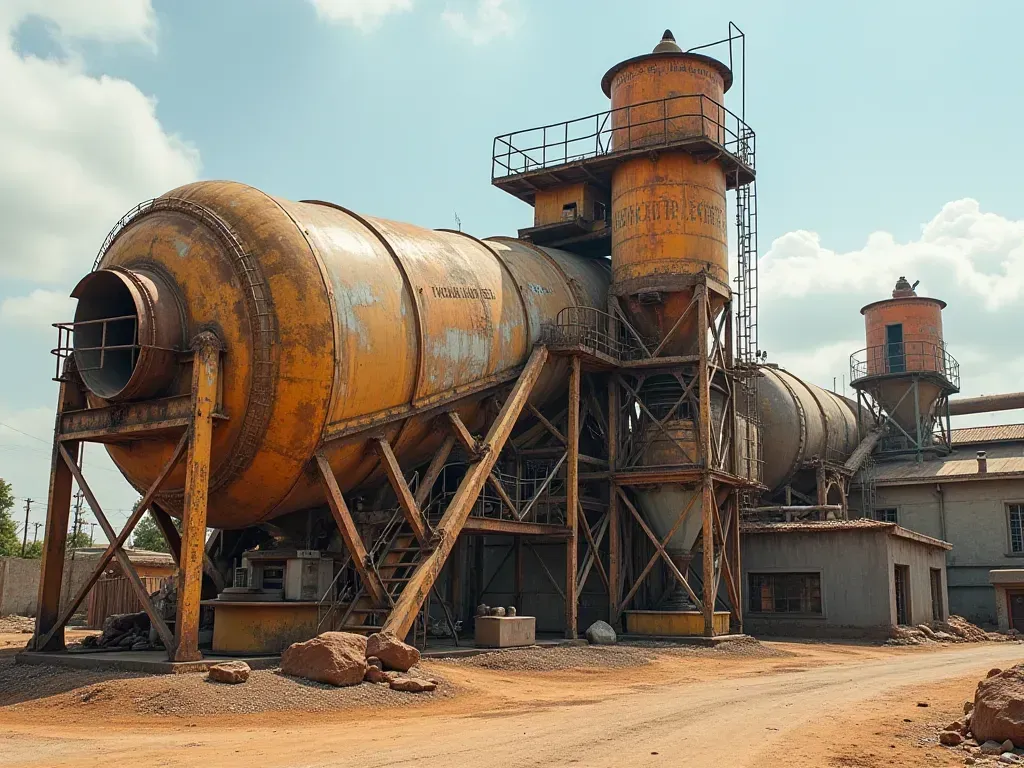
Automation and IoT in Dry Concrete Batching Operations
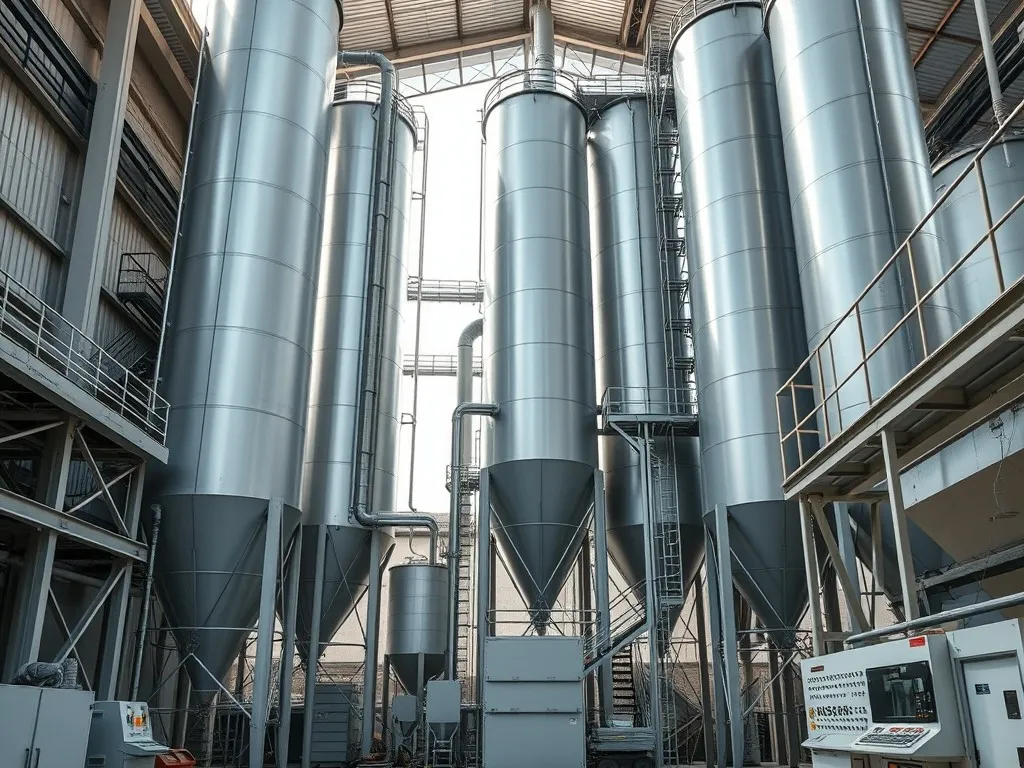
Automation and IoT on a concrete batching plant are two separate systems that are often sold as one idea. Automation is the control loop: the PLC and its batching software weigh aggregate, cement, water and admixture, run the discharge sequence and open the gates, with the operator setting the recipe rather than pulling levers. IoT is the data loop: sensors and the PLC's own registers are pushed through a gateway to a dashboard or a phone, where batches, faults and trends can be read off-site.
The distinction matters because the two are bought and priced separately. A plant can be fully automatic and have no IoT at all, running accurate batches with every record kept on the local panel and nothing leaving the site. Equally, a gateway can be bolted onto a plant whose weighing is still partly manual, in which case the data shows what the operator did rather than what the machine controlled.
On a dry plant the control layer works the same way as on a wet one, but the material handling differs. Aggregate and cement are batched dry and mixed later, so the accuracy of the weighing and the order in which materials are released carry more of the burden. That is where automation pays back first on a dry plant, before any dashboard is added.
The weighing and sequencing layer: where accuracy is won or lost
Weighing is where a batching plant earns or loses its accuracy, and it happens long before any cloud platform is involved. On a semi-automatic plant, inaccurate weighing wastes cement, a loss that compounds batch after batch and stays invisible in the silo readings rather than showing up as a visible fault. Automated ready mix concrete batching plant systems reduce material waste by up to 15 percent, and one ready-mix producer brought waste below 0.5 percent after moving to a fully automatic plant.
Sequencing matters as much as the scale. The control layer decides the order in which aggregate, cement and water are released, how long each gate stays open, and when the discharge starts, and every one of those decisions shifts the final proportioning. Getting the sequence right also reduces the idle time between batches, which is where the energy efficiency gains in dry batching usually begin.
When you specify the system, ask for three things rather than the phrase "fully automatic". Request the load-cell resolution on each scale, the calibration routine and how often it is run, and the permitted tolerance stated separately for cement, aggregate, water and admixture. A supplier who can answer those three questions in writing is describing a control layer; one who answers with a dashboard demo is describing a screen.
Sensors that close the loop: moisture, mix time and consistency
Weighing and sequencing decide what the plant intends to produce; sensing decides whether it actually did. IoT sensors on a batching plant track aggregate moisture, cement and admixture ratios, and mixing time and consistency, and feed those readings back into the batch before the load leaves the plant. Without that feedback, the control layer is open-loop: it repeats the same command whether the sand arrived wet or dry.
Moisture is the measurement that pays for itself first. When a probe detects higher moisture in the aggregates, the system automatically reduces the added water to hold consistent slump and durability. The same correction protects the cement and admixture ratios, because the water-to-binder relationship stays where the mix design put it instead of drifting with the weather.
Beyond water, software can adjust mix designs in real time for variation in raw material quality, so that the batch responds to conditions rather than to a fixed recipe.
A moisture probe that has not been calibrated recently is worse than no probe at all, because the system corrects confidently in the wrong direction.
So put probe calibration on a schedule and keep the record, in the same way you keep scale calibration records. Check the probe against an oven-dried sample at each aggregate stock, and recheck whenever a new delivery changes the material. Mixing time and consistency readings deserve the same treatment: if the sensor is not verified, the correction it triggers is guesswork.
What remote monitoring gives you, and what data it needs
The IoT layer is a gateway wired to the batching plant's PLC. It reads the values the controller already holds: current mixing time, number of batches, volume, and actual consumption of cement, aggregate, water and admixture. Nothing extra is measured at the gate; the gateway simply lifts data that the control system generates on every cycle and pushes it off site.
What that data buys is visibility across shifts and sites. Vendor-reported figures put the gains at a 15 percent increase in production efficiency and a 90 percent drop in quality returns, and vendors attribute the repair time with remote diagnostics to under one hour. Treat the efficiency and returns numbers as vendor-reported outcomes and ask for the reference plants behind them. The repair figure is the one that matters most on a remote site, where a technician's travel can dwarf the fix itself.
Specify the data terms before signing. State who owns the production data, where it is stored and for how long, and whether you can export it in a usable format. Then settle the connectivity question: what the gateway buffers locally when the link drops, how many days of records it holds, and whether it backfills automatically on reconnection. A gateway that loses batches during an outage gives you a partial picture you cannot audit.
Remote monitoring suits dispersed operations, and the same reasoning applies to mobile plants working away from a fixed base: write the ownership, storage and buffering terms into the order, not the manual.
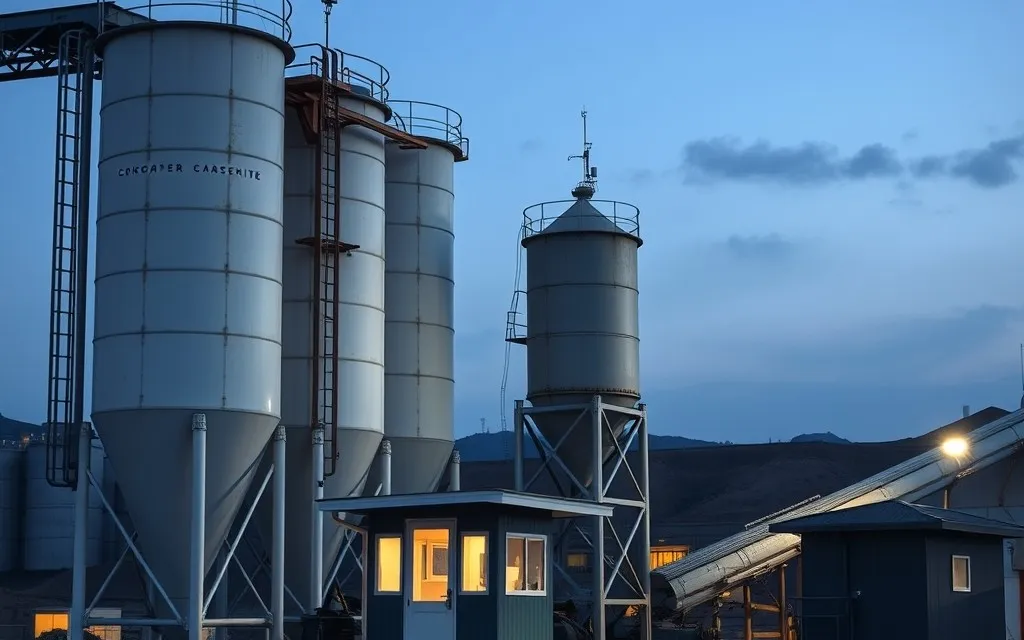
Predictive maintenance: what it can and cannot see
Predictive analytics on a batching plant watch for changes that precede a breakdown: wear on mixer blades, motor current creeping up, a bearing running hotter than it should. IoT-enabled plants use this to schedule maintenance before a failure stops production, rather than after. The value is in the warning arriving while the part still has life left, not in a dashboard that only confirms what the operator already heard.
None of it works without a baseline. A new plant needs several weeks of ordinary running before the system knows what normal looks like on that machine, with that aggregate, at that duty cycle. Alerts raised in the first month are mostly noise, and an operator who learns to ignore them will keep ignoring them later.
Vibration and current trending on drives and conveyors is usually the best first sensor to fit. These are cheap to instrument, the failure modes are well understood, and a gearbox or motor beginning to degrade shows up clearly in the trend long before it seizes.
Keep the manual inspection route regardless. Sensors do not see a blocked chute, a belt running off its tracking, or material building up inside a hopper. Condition monitoring tells you the machine is changing; a person walking the plant tells you why.
The decision rule: which layer to buy first on a dry plant
Buy in the order the layers depend on each other. Accurate weighing and reliable sequencing come first, because a moisture probe, a remote dashboard and an alerting system all inherit whatever error the batching cycle already carries. If the scale drifts or the discharge sequence stalls, the data above it records the fault faithfully and nobody can tell whether a bad batch came from the mix design or the machine.
Aggregate moisture sensing comes second. Water content in the sand and stone is the largest single source of variation in a dry plant's output, and no amount of remote reporting fixes it after the fact. A plant that weighs well but ignores moisture still chases strength and workability by hand. Pair this layer with the routine that keeps probes clean and calibrated, which sits naturally alongside a planned maintenance schedule rather than replacing it.
Remote data and alerts come third, and only once the plant runs consistently enough for the data to mean something. Streaming an unstable process just delivers noise to a phone. Fix the weighing, the sequence and the moisture loop first, then let remote access show you trends worth watching.
Predictive analytics come last. They pay on plants running at high utilisation, where an unexpected stop hurts, and where a maintenance team exists to act on what the model flags. On a low-hour plant with no one to respond, the subscription outlives its usefulness.
Mistakes that make automation and IoT a wasted purchase
The most common retrofit failure is buying the dashboard first. A cloud platform fed by load cells that have drifted or never been calibrated produces data that looks precise and is wrong: batch after batch logged as on-spec while the cement is short. Calibrate the weighing system, verify it against test weights, and only then decide that the data deserves a screen.
Every automated plant needs a manual fallback that operators know how to use. If the gateway or cloud connection drops, the plant must still batch from the local panel, with setpoints and discharge logic available without the network. Plants that skip this discover the gap during a pour, when the mixer is full and nobody remembers how to run it offline.
Training is the other silent failure. Operators who do not understand what a moisture alarm is telling them will silence it rather than act on it, and the sensor becomes decoration. Walk the crew through each alarm, what causes it and what to do, and confirm they can explain it back.
Finally, automation is a routine, not a purchase. Load cells need periodic calibration, sensors need cleaning and drift checks, and software needs updates and backup of its recipes and logs. A plant that budgets for the hardware but not for the upkeep ends up with a system nobody trusts.
Frequently Asked Questions
Can IoT be retrofitted to an existing dry batching plant?
Yes, IoT can usually be retrofitted to an existing dry batching plant, because most monitoring packages read data from the plant's existing PLC control system rather than replacing it. That data includes current mixing time, number of batches, volume and actual consumption of cement, aggregate, water and admixtures. Ask the supplier which PLC models and protocols their gateway supports before committing.
Does automation change the concrete mix design or just the way it is batched?
Automation mainly changes how the mix is batched, and moisture feedback adjusts added water within the tolerances you set. When sensors detect higher moisture in aggregates, the system automatically reduces water content to hold consistent slump and durability. The approved design and its tolerances remain your responsibility.
What internet connection does a remote-monitored batching plant need?
A remote-monitored batching plant needs a stable, always-on connection at the control cabin, typically a wired line, fibre or a cellular router, sized for small telemetry traffic rather than video. The gateway reads the PLC and pushes batch and consumption data to the cloud, so brief outages should buffer locally and resend. Confirm upload interval, local storage and who pays for the SIM or line.
How often do moisture sensors and load cells need recalibration?
Moisture sensors and load cells should be checked on a fixed schedule you set from your own drift history, with load cells verified against test weights and moisture probes checked against oven-dried samples. Aggregates that vary by source or season justify more frequent checks. Because weighing errors drive cement waste, keep the calibration log with the batch records.
For the full overview, see automated dry concrete plants.
Related in this series: concrete batching plant maintenance schedule, concrete batching plant capacity selection.